
Precision casting with excellent quality
Integrated research and development, manufacturing, sales, and technical services of laboratory scientific instruments and intelligent equipment
National Consultation Hotline 15738867410
Integrated research and development, manufacturing, sales, and technical services of laboratory scientific instruments and intelligent equipment
National Consultation Hotline 15738867410

15738867410
Greenland Binhu International City (District 1), Erqi District, Zhengzhou City, Henan Province
Details
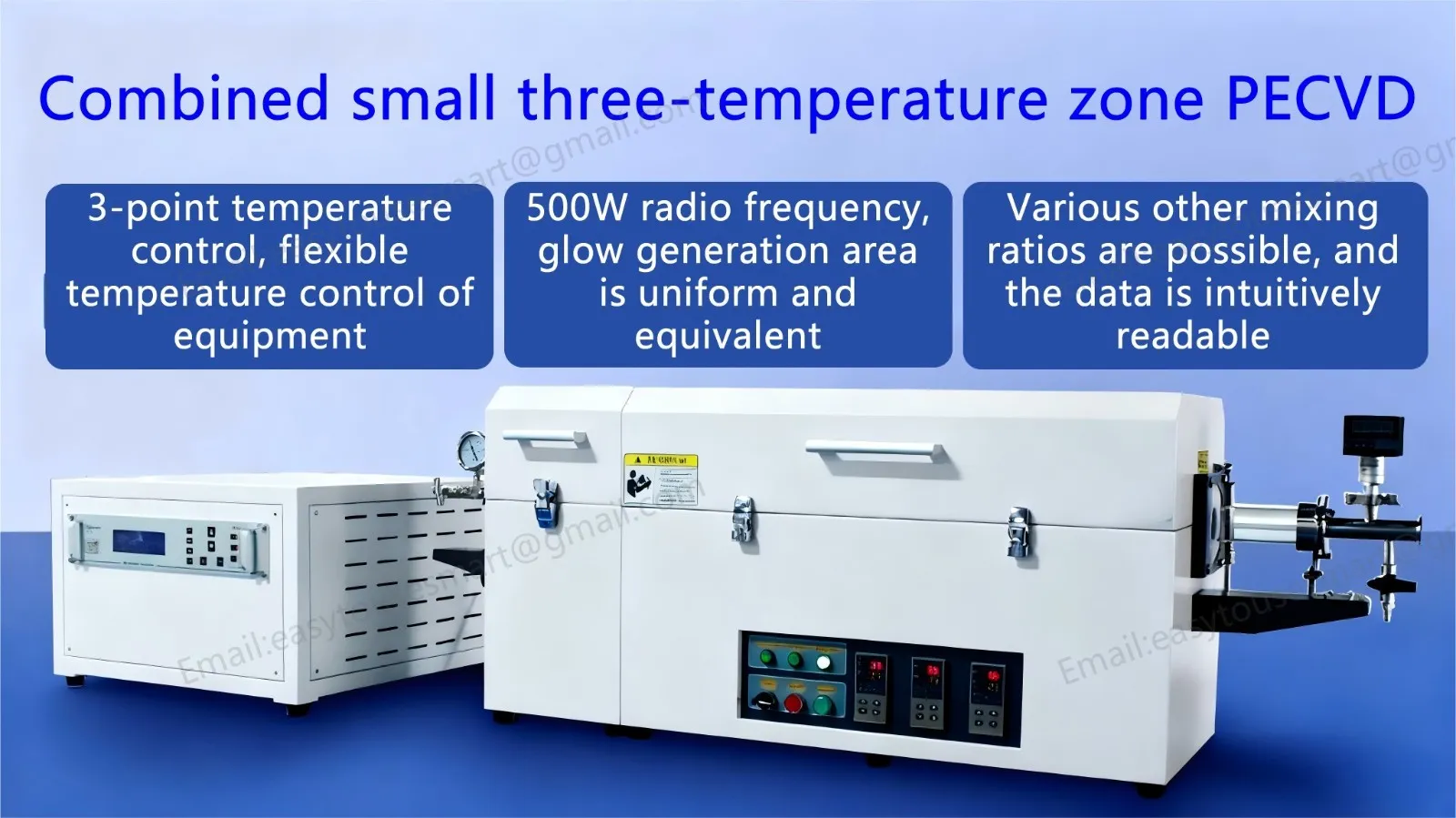
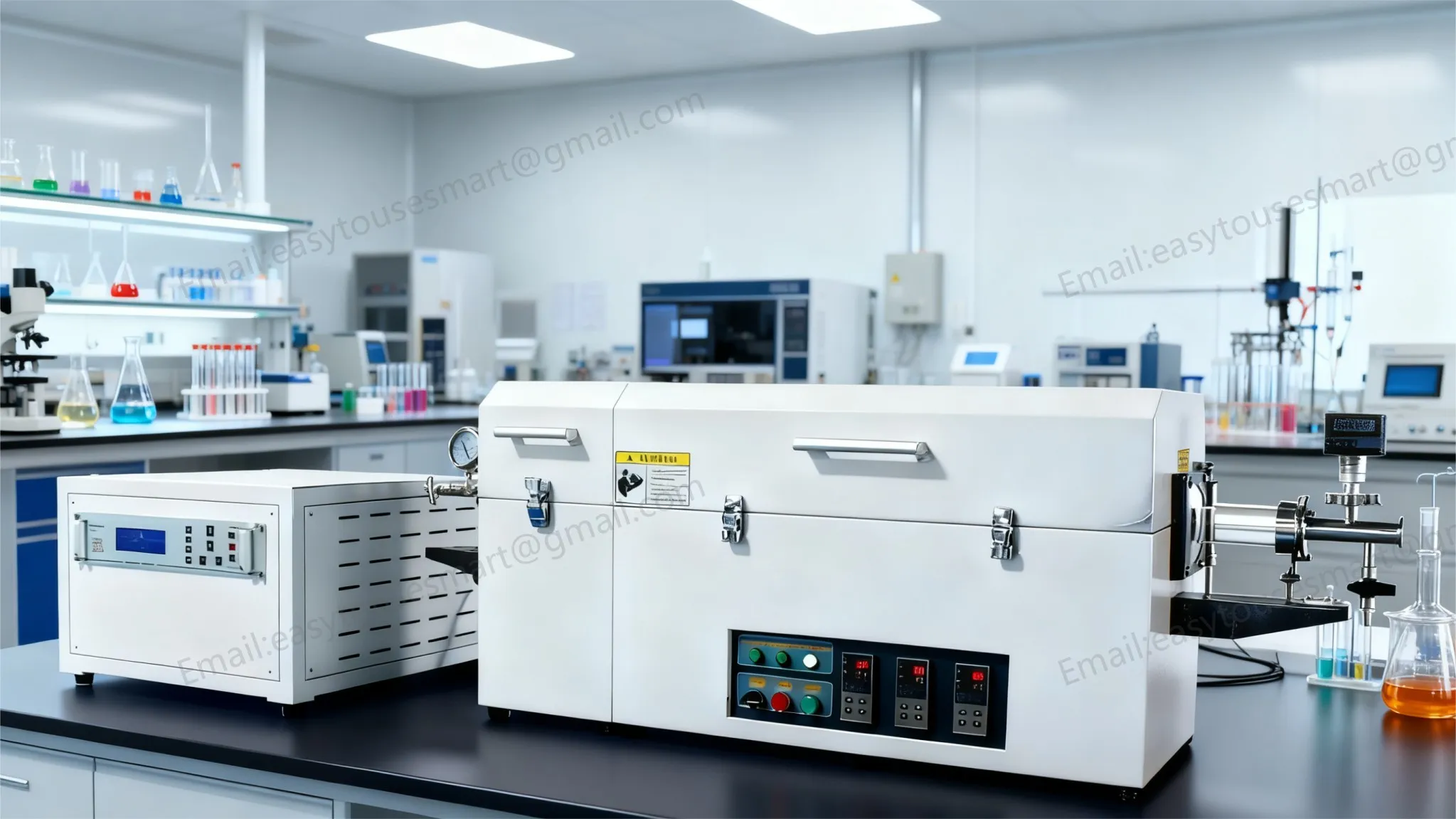
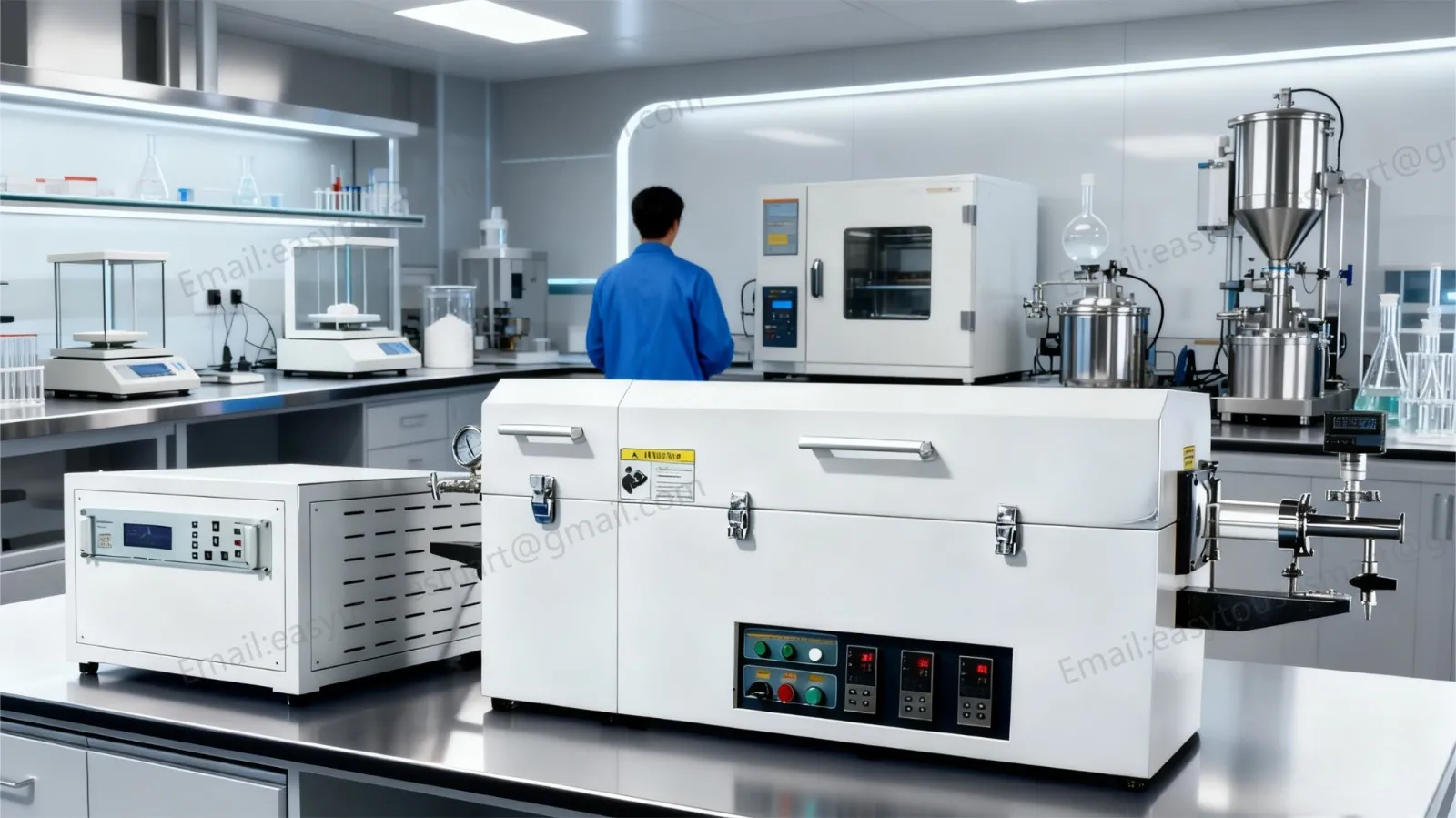
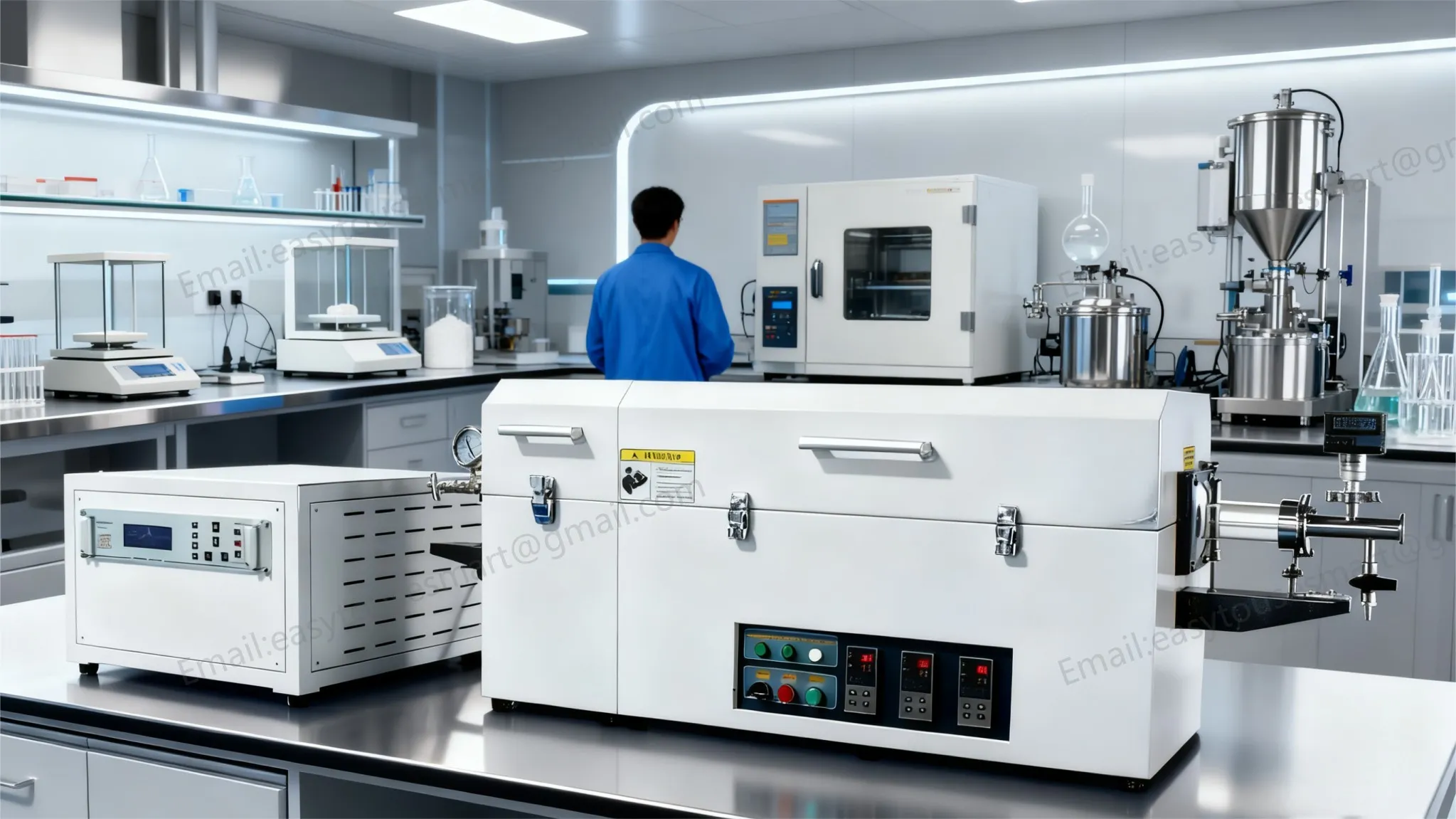
The 1200℃ PECVD system, featuring a three-zone temperature control system, is a cutting-edge experimental apparatus that integrates high-temperature thermal CVD with low-temperature plasma enhancement technology. Its core advantage lies in the synergistic effect of independent temperature control in three zones and an RF plasma source. The high-energy electron collisions from the plasma dissociate reactive gas molecules into highly reactive free radicals and ions, significantly reducing the activation energy required for chemical reactions. This enables the growth of high-quality, dense thin films at relatively low substrate temperatures. Meanwhile, the 1200℃ upper temperature limit retains the capability of traditional thermal CVD for processing high-melting-point materials. This system is widely applied in the preparation and surface modification of graphene, diamond-like carbon (DLC) films, amorphous silicon/microcrystalline silicon thin films, silicon nitride/silicon oxide insulating layers, carbon nanotubes, and various functional coatings, serving as a key R&D tool in photovoltaics, semiconductors, optics, and new materials.
· The system features independent three-zone temperature control with plasma synergy, utilizing high-quality silicon-carbon rod heating elements and an independent three-zone PID intelligent temperature control module. It achieves a maximum operating temperature of 1200°C with a temperature control accuracy of ±1°C.
o Flexible gradient construction: The three temperature zones can be independently set to form a perfect temperature curve of "precursor evaporation-plasma reaction-post-treatment annealing".
o Plasma enhancement: The built-in RF power supply (13.56 MHz) is coupled to the reaction chamber via a matching network, generating a stable and uniform glow discharge. The high-energy plasma field not only accelerates the reaction rate but also improves the density, adhesion, and crystalline quality of the film, making it particularly suitable for temperature-sensitive substrate materials.
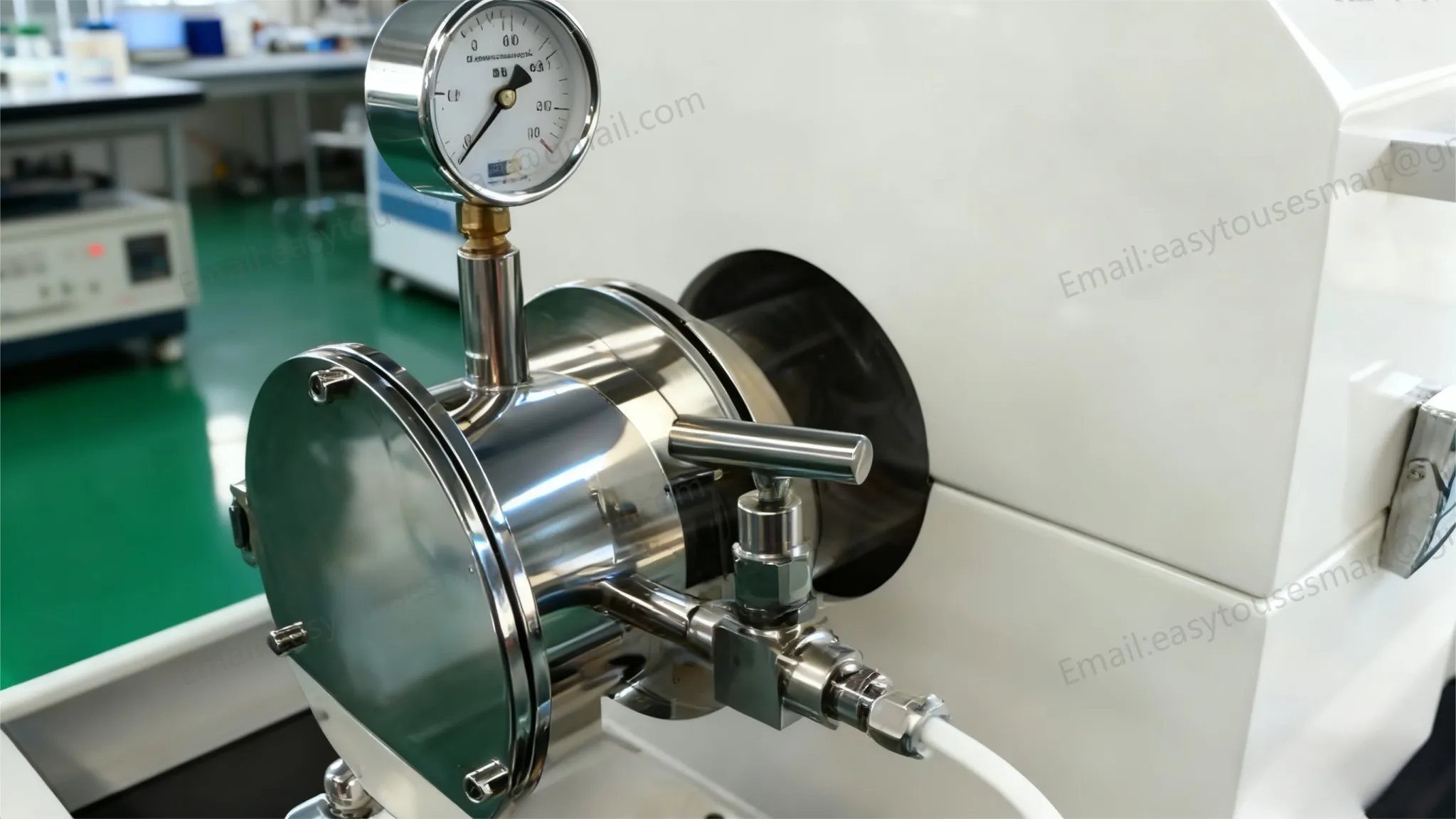
· High-purity quartz reaction chamber and electrode design. The chamber utilizes high-purity (99.99%) quartz tubes (Φ60mm-100mm) that are heat-resistant, corrosion-resistant, and free from metal contamination. It is equipped with dedicated parallel plate electrodes or coil-coupled electrodes to ensure uniform plasma distribution within the chamber. The flange features a stainless steel quick-release mechanism integrated with a water-cooling sleeve, effectively protecting the sealing ring and electrode leads to ensure long-term operational safety.
· Precision Multi-Channel Gas Delivery and Mixing Control System. This integrated system features 4-8 high-purity gas pipelines, each equipped with an imported mass flow controller (MFC) with ±1% F.S. accuracy. It supports precise mixing ratios for various reactive gases (e.g., SiH₄, CH₄, NH₃, O₂) and carrier gases. The unique pre-mixing chamber design with bypass exhaust function ensures uniform gas mixing before entering the plasma zone, while minimizing pressure fluctuations during gas path switching to guarantee film uniformity.
· The wide-range vacuum and pressure adaptive system supports both atmospheric pressure PECVD and low-pressure PECVD processes. It features a high-performance mechanical pump with a maximum vacuum of 5×10⁻³ Pa (molecular pump modules are optional). The system incorporates a high-precision capacitive film gauge for real-time pressure monitoring and feedback control of the reaction chamber. Combined with an electric butterfly valve, it enables automatic closed-loop pressure control, creating an optimal plasma environment for nucleation and growth of various materials.
· Intelligent Safety Protection and Exhaust Gas Treatment
o Multi-layer safety interlock: Features over-temperature alarm with power-off, cooling water flow monitoring (water cut-off for heating and RF), overcurrent protection, leakage current protection, RF reflection power protection, and gas leak alarm.
o Exhaust gas treatment: For toxic or flammable gases such as silane and phosphine, dry burners or wet scrubber exhaust treatment systems can be optionally installed to ensure laboratory safety.
o Intelligent Control: Featuring a PLC-based central control system and a large-size color touchscreen, it supports programming over 30 temperature curves, with real-time monitoring of temperature, vacuum level, gas flow rate, RF power, and reflected power, all of which can be exported for analysis.
Parameter item | qualification |
Model Identification | 3-Zone PECVD-1200 (Three-temperature zone, plasma-enhanced, 1200°C) |
heating furnace body | Heating element: high purity silicon carbide rod (SiC) Number of temperature zones: Three independent temperature zones Maximum temperature: 1200°C (long-term operation ≤1150°C) Length of constant temperature zone: Single temperature zone ≥200mm, total heating zone ≥600mm Temperature control accuracy: ±1℃ Ramp rate: 0.1-20°C/min (programmable) |
plasma system | Power type: RF power supply Operating frequency: 13.56 MHz Output power: 0-300W / 0-500W (adjustable) Matching network: automatic/manual impedance matcher Electrode type: parallel plate electrode or coil-coupled (optional) |
reaction chamber | Material: High-purity quartz tube (99.99%) Size: Φ60 / 80 / 100 mm × 1200 mm (optional) Flange: Heat-resistant stainless steel quick-release flange with water-cooling sleeve and RF feed-through interface |
gas system | Number of channels: 4 channels / 6 channels / 8 channels (expandable) Control method: Imported Mass Flow Controller (MFC) Flow range: 0-10/20/50/100/200/500 SCCM (configure on demand) Compatibility: Supports corrosive, flammable, and toxic gases (requires special piping and exhaust gas treatment) |
vacuum and sub-atmospheric system | Extreme vacuum: ≤ 5×10⁻³ Pa (mechanical pump) / ≤ 1×10⁻⁵ Pa (molecular pump) Pressure Measurement: Capacitive Thin Film Gauge (High Precision) Pressure control: Electric butterfly valve + PID pressure controller (optional) |
coolant passage | Method: Forced air cooling for rapid temperature reduction / Water-cooled flange / Water-cooled electrode Wind-cooled power: adjustable speed and high air volume fan |
navar | Interface: 10-inch color industrial touch screen + PLC intelligent control Functions: Temperature/Radio Frequency/Gas/Vacuum Interlock Control, 30-50 Segment Program Setting, Real-time Data Curve Recording, Fault Self-diagnosis, USB Data Export |
security guard | Overtemperature power-off, water-off protection, RF reflection protection, overcurrent/short-circuit protection, emergency stop button, gas leak alarm, exhaust gas treatment interlock |
power requirement | AC 380V (three-phase), 50Hz, total power 8kW-12kW (including RF power supply) |
· Low-temperature graphene growth: Utilizing plasma-activated carbon sources to grow high-quality graphene on copper foil or low-temperature substrates, thereby reducing energy consumption and thermal damage.
· Preparation of diamond-like carbon (DLC) films: Deposition of high-hardness, low-friction DLC films for surface modification of tools, molds, and biomedical implants.
· Thin-film photovoltaic cells: The growth of amorphous silicon (a-Si) and microcrystalline silicon (μc-Si) absorber layers, along with P-I-N junctions, enhances the photoelectric conversion efficiency.
· Semiconductor insulating layer: A passivation layer or dielectric layer of silicon nitride (SiNx) or silicon oxide (SiOx) is deposited for IC manufacturing and MEMS devices.
· Carbon nanotube arrays: Growth of vertically aligned carbon nanotube arrays via plasma-enhanced catalyst activity.
· Functional optical coatings: preparation of antireflection films, reflective films and functional thin films with special spectral selectivity.
The triple-temperature zone plasma-enhanced chemical vapor deposition system PECVD-1200℃ seamlessly integrates the stability of high-temperature heat treatment with the efficiency of plasma enhancement. Its triple-temperature zone design delivers unparalleled process flexibility, enabling precise control over precursor states, reaction kinetics, and post-processing. The RF plasma source significantly lowers the reaction temperature threshold while improving film quality and deposition rates. Whether exploring novel low-temperature processes or optimizing high-performance film structures, this system provides exceptional control capabilities and outstanding data reproducibility. With intelligent operation, comprehensive safety protection, and professional exhaust treatment solutions, it stands as the preferred tool for cutting-edge material research and industrial transformation in high-level laboratories.
QR code

Contact information
15738867410
Online Message
Top